
Construction Mini Cranes
Portable Rooftop Mini Crane: Site and Lifting Requirements
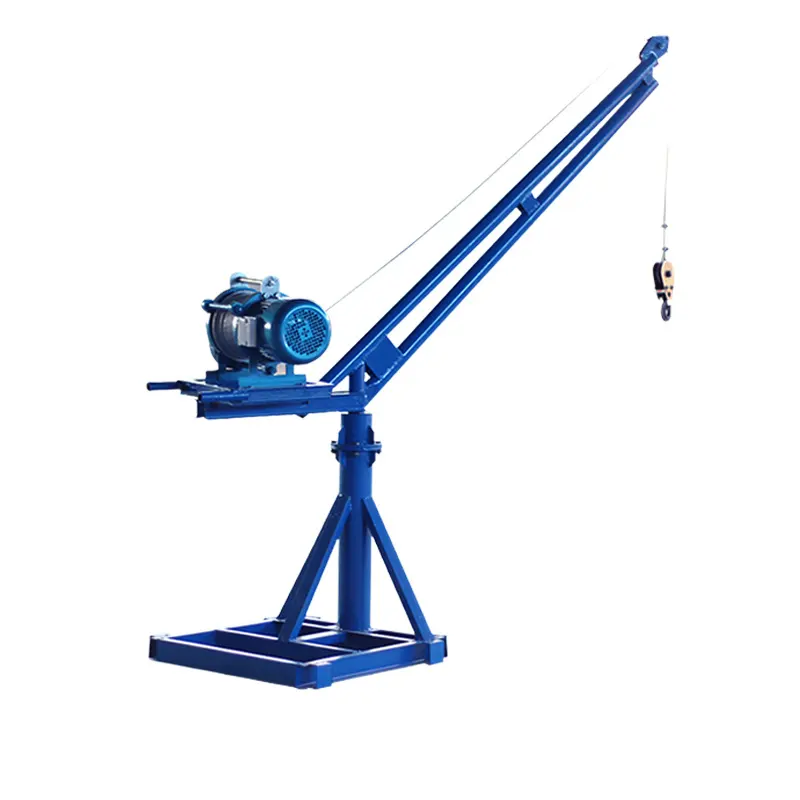
Compact electric-hoist equipment for renovation and material transfer.
| Drive | Electric hoist |
|---|---|
| Structure | Steel bracket and reinforced flange |
| Voltage and rope length | Project configuration |
Product role and applications
A rooftop mini crane brings material lifting to a building edge or elevated work position. The electric hoist moves the load vertically and the rotating support helps position it. Portability describes transport and assembly convenience; it does not establish that a roof can support the lifting arrangement.
Structure and compatibility
The steel bracket and reinforced flange form part of the mounting arrangement. The interface with the building, the boom position and the load path must be assessed together. Roof finish, parapet shape or an available flat area cannot substitute for confirmation of the structural support and approved mounting method.
Features in practical use
A compact transport arrangement can help bring lifting equipment to an elevated location. The practical benefit depends on the access route, component handling and assembly space. Consider how the equipment reaches the roof as well as how it lifts material once installed.
Specifications
| Drive | Electric hoist |
|---|---|
| Structure | Steel bracket and reinforced flange |
| Voltage and rope length | Project configuration |
Key features
- Rotating support for load positioning
- Compact arrangement for transport and assembly
- Roof support and mounting require project review
Technical guide
Configuration explained
The bracket is only one part of the load path. The mounting interface and supporting building structure must be assessed for the proposed lifting arrangement. Provide reach, load and landing geometry; neither a reinforced flange nor an electric hoist establishes that an unidentified roof can carry the crane.
- Supporting surface or structure
- Crane frame and mounting
- Boom reach and lifting path
- Load and attachment
Provide the mounting and rope-path details
For rooftop material transfer, the source lists a compact steel bracket, reinforced flange and electric hoist. Provide roof photographs, the lifting route, required rope length and installation access rather than selecting from an unverified capacity in an old URL.
Information to include in your inquiry
Include photographs of the proposed mounting position and a sketch of the rope path. State the load, lifting height and available power. The mounting arrangement and supporting structure need project review; a compact frame alone does not establish installation suitability.
What changes the buying decision
A portable crane still transfers forces into the roof or supporting structure. Provide the proposed fixing position, edge distance and material landing area for review. Rope travel, lifting height and reach are different dimensions; a short product name or old URL cannot establish the capacity at your required operating point.
Questions and answers
What should the rooftop quotation identify?
Ask whether it includes the frame, hoist, wire rope, hook, controls and fixing components, with the load and boom reach stated for that arrangement.
Can a roof photograph establish its load-bearing suitability?
A photograph helps explain the site but is not a structural assessment. The mounting and supporting structure need application-specific review.
What access details matter before delivering a rooftop crane?
Provide the route to the roof, available openings and handling constraints. Ask for component dimensions and weights for the quoted arrangement.