


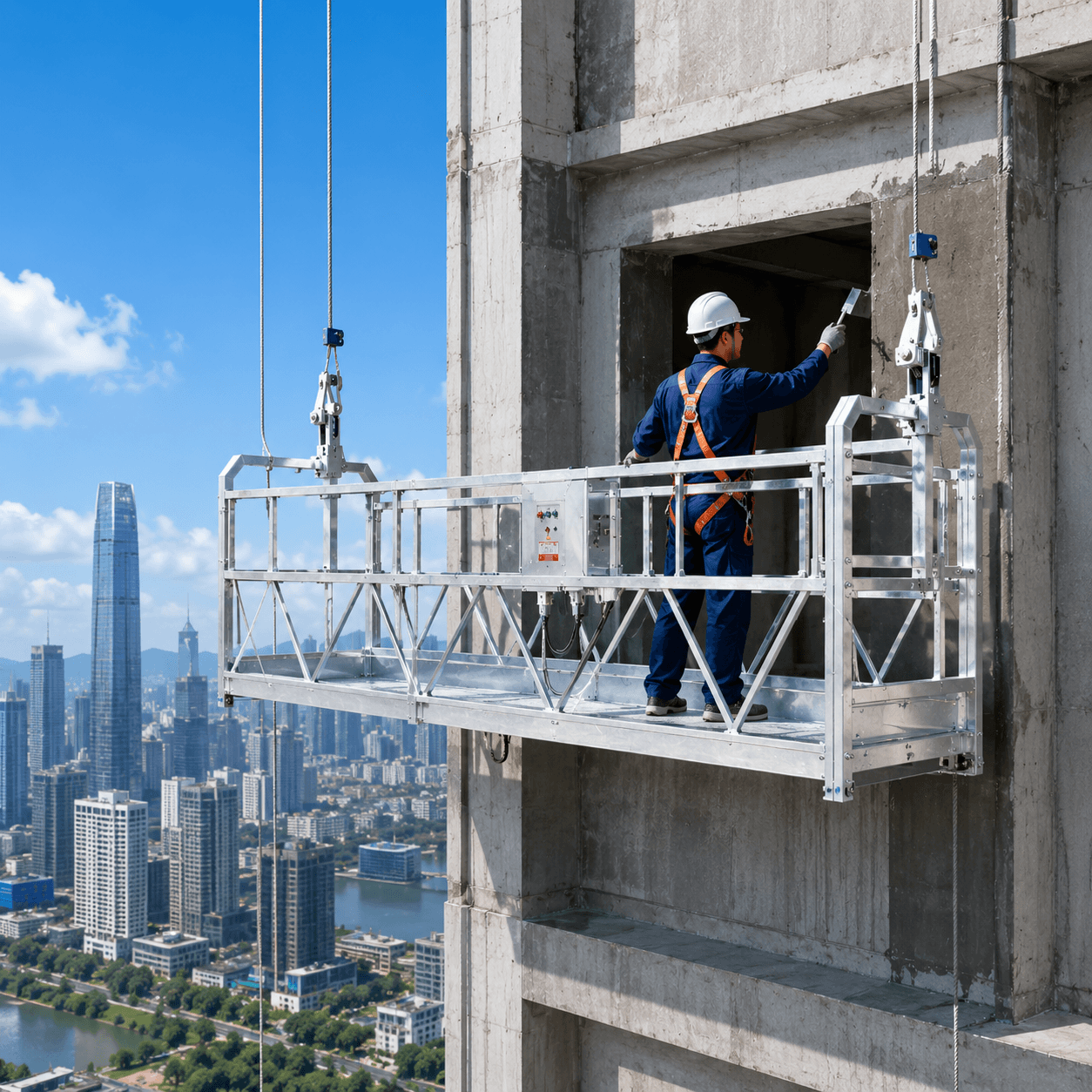
Suspended platforms are essential equipment for modern construction and building maintenance projects, providing safe and efficient vertical access for workers at any height. This complete guide from BuildingLift.com explains how suspended platforms work, key safety measures, setup procedures, and long-term maintenance tips for maximum reliability and performance.
Table of Contents
Introduction
At BuildingLift.com, we specialize in manufacturing high-performance suspended platforms that ensure safe, efficient, and reliable access for workers in high-rise construction, glass installation, façade repair, and maintenance. Understanding how to properly set up, operate, and maintain your equipment is the key to achieving long-term productivity and safety.
What Is a Suspended Platform?
A निलंबित मंच—also known as a temporary access platform—is an electric-powered working platform suspended by steel wire ropes from a building’s roof or structure. It allows workers to move vertically along building façades for construction, cleaning, or inspection tasks.
Unlike traditional access methods, suspended platforms provide greater flexibility, faster installation, and higher safety efficiency, making them the preferred solution for modern projects.
There are several models available, such as ZLP500, ZLP630, ZLP800, and ZLP1000, which differ in load capacity and platform length.
👉 Learn more about our full range of Suspended Platform Systems.
Key Components and Design Features
A well-designed suspended platform system includes the following components:
Suspension Mechanism – Mounted on the rooftop or parapet to hold wire ropes securely.
Working Platform – The area where workers stand, usually made of aluminum or steel.
Hoist Motor – Powers vertical movement; models like LTD6.3 or LTD8 are common.
Safety Lock – Engages automatically if the wire rope slips or fails.
Control Box – Central unit for lifting, lowering, and emergency stop control.
Wire Ropes & Cables – Provide lifting support and ensure stable balance.
At BuildingLift.com, all parts are manufactured under strict quality standards to guarantee durability and operator safety.
How to Install a Suspended Platform Safely
Follow these essential steps for correct and secure installation:
Site Inspection – Check rooftop structure strength and clearance height.
Assemble Suspension Mechanism – Mount parapet clamps or adjustable outriggers.
Lay Out Wire Ropes – Feed ropes through hoists and connect to counterweights.
Install the Platform – Assemble the modular sections and attach guardrails.
Connect Power Supply – Ensure correct voltage (usually 380V or 220V).
Safety Test – Verify hoist movement, limit switches, and lock performance before use.
Each platform should undergo a load test before operation to confirm stability.
You can find detailed installation manuals in our Resources Section.
Essential Safety and Compliance Standards
To ensure worker protection and equipment reliability, all suspended platforms must comply with international standards such as:
Key safety devices include:
Dual safety locks for fall protection
Limit switches to prevent over-travel
Overload sensors to stop operation when capacity is exceeded
Emergency stop button for instant power cut-off
Regular safety inspections help prevent accidents and ensure compliance with local regulations.
Maintenance and Inspection Best Practices
Regular maintenance ensures a long service life and safe operation. Follow these guidelines:
Inspect wire ropes for wear, corrosion, or broken strands
Clean and lubricate hoists every 500 working hours
Test safety locks monthly
Keep electrical components dry and protected from moisture
Store platforms properly when not in use
All BuildingLift.com products come with detailed maintenance instructions and spare parts support to ensure reliable performance over years of use.
Applications and Advantages
Suspended platforms are widely used in:
High-rise building construction and façade work
Window and glass installation
Painting and plastering operations
Bridge inspection and industrial chimney repair
Key Advantages:
Rapid assembly and disassembly
Lower transportation costs
Flexible platform length options (2m–8m)
Safe and stable operation even at great heights
With our ZLP series suspended platforms, projects can be completed faster and more safely compared to traditional access methods.
Conclusion
Selecting and maintaining a suspended platform is a crucial part of ensuring both construction efficiency and worker safety. By following the correct setup, inspection, and operation guidelines, your team can complete high-rise projects with confidence and reliability.
For premium-quality suspended platforms that meet international safety standards, trust BuildingLift.com — your reliable partner for access solutions.
Contact BuildingLift.com
Ready to enhance your next construction project with certified suspended platforms?
👉 Contact us today for a free consultation and quotation.
Need a ZLP Suspended Platform for Your Project?
BuildingLift supplies ZLP500, ZLP630, ZLP800, and ZLP1000 suspended working platforms for global construction, facade maintenance, window cleaning, and industrial access projects. Visit our temporary suspended platform page or हमसे संपर्क करें for model selection support.
 Previous Post