Descrição
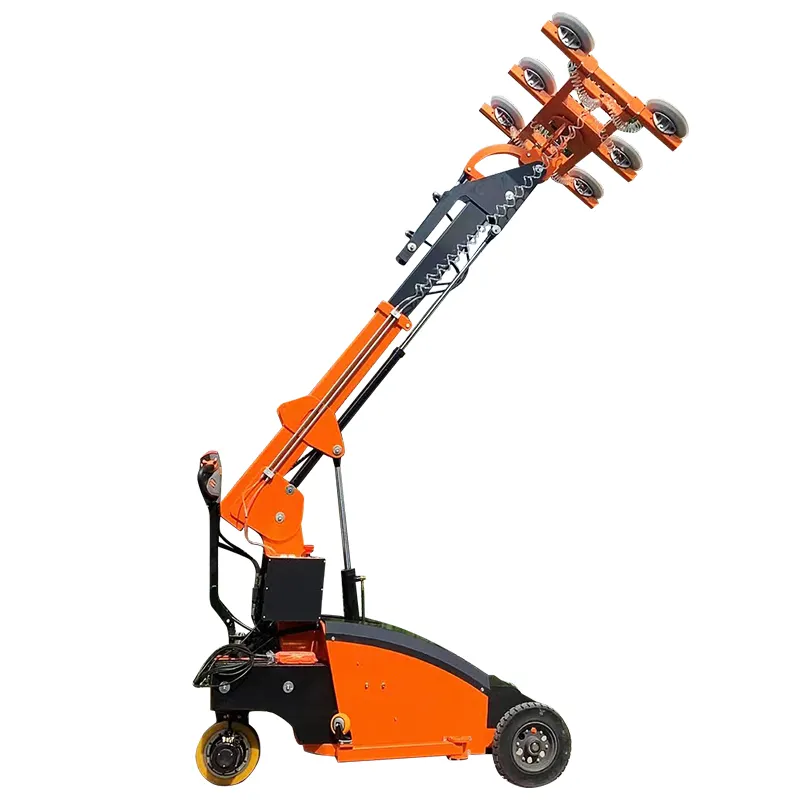
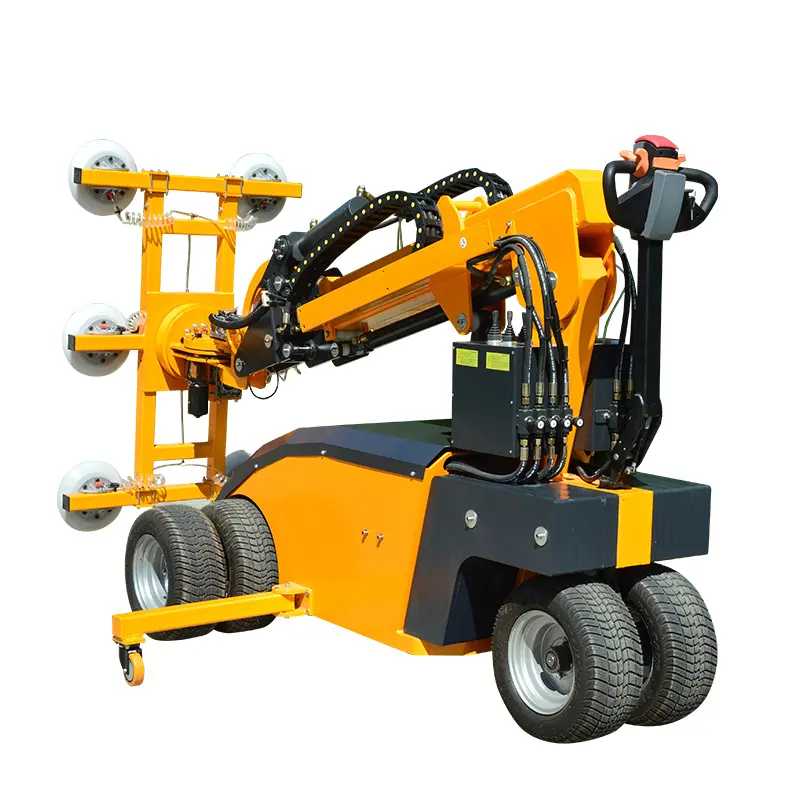
Mobile Vacuum Lifter for Glass and Panel Handling
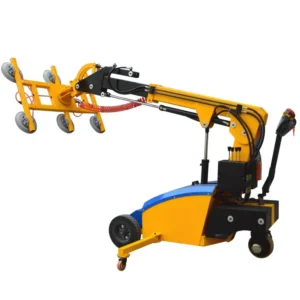
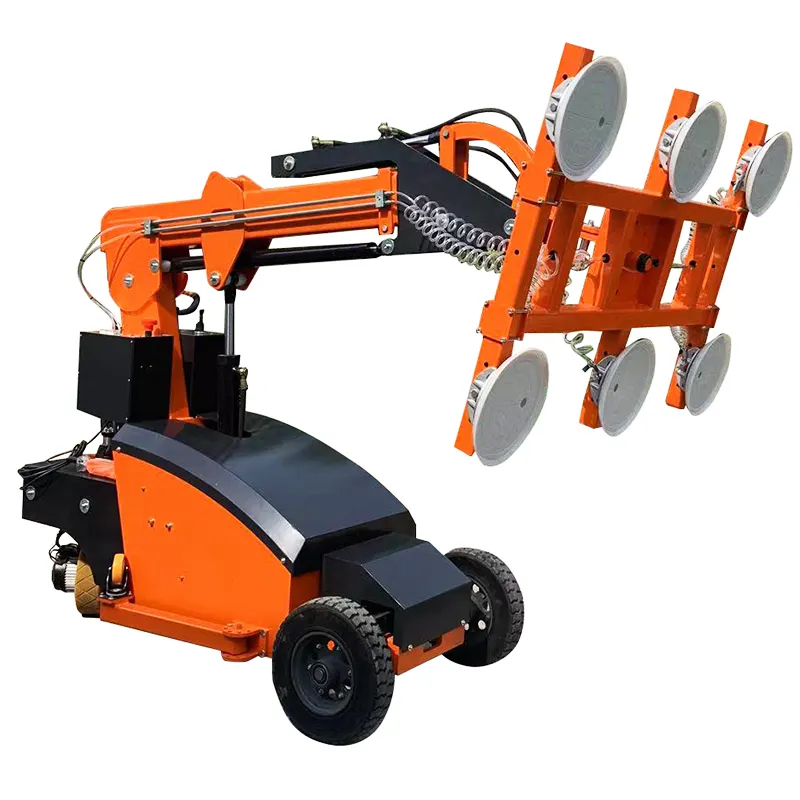
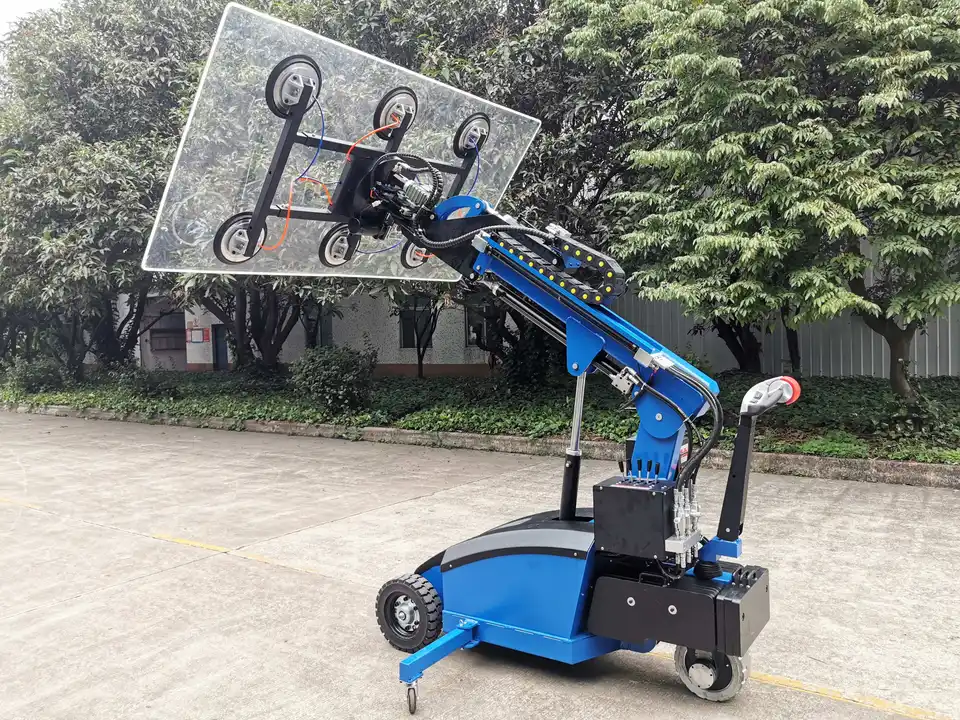
This vacuum lifter is a battery-powered mobile handling machine for flat glass, metal sheet, coated plywood and other suitable non-porous panels. Available capacities include 400 kg, 600 kg and 800 kg, subject to the workpiece surface, suction-pad arrangement and operating conditions.
Typical Applications
- Glass curtain wall installation
- Movement and positioning of large glass panels
- Handling smooth metal sheets and coated panels
- Workshop and construction-site material staging
- Installation of compatible facade and interior panels
The vacuum lifter reduces direct manual handling and allows controlled lifting, rotation and positioning. The workpiece must be clean, dry and suitable for vacuum attachment.
Available Capacities and Functions
| Item | Options |
|---|---|
| Rated capacity | 400 kg, 600 kg or 800 kg |
| Poder | Battery with built-in vacuum pump |
| Rotation | Manual or powered, depending on configuration |
| Tilt | Up to 180 degrees by selected model |
| Side shift | Project configuration |
| Mobility | Mobile chassis with rubber tires |
Vacuum System
The machine uses suction pads connected to an onboard vacuum pump. Dual-circuit or redundant control can be specified for applications requiring additional system monitoring. A pressure display allows the operator to check vacuum condition before lifting.
Rated capacity applies only when the pads form a reliable seal. Porous, textured, wet, dusty or damaged surfaces may not be suitable. Test the actual workpiece and pad configuration before routine use.
Choosing the Correct Suction Pads
Standard pads are intended for smooth, non-porous materials. Sponge or special sealing pads may be required for other compatible surfaces. Pad quantity, diameter and spacing must suit the panel dimensions, weight and center of gravity.
Before ordering, provide the panel material, maximum weight, length, width, thickness and surface finish. BuildingLift can then review the required vacuum lifter capacity and pad layout.
Operation and Inspection
- Inspect suction pads for cuts, wear and contamination.
- Check hoses, valves, gauges and vacuum alarms.
- Confirm battery charge before beginning the lift.
- Clean the workpiece contact area.
- Complete a low-height test lift before transport.
- Keep personnel clear of suspended loads.
Operators should follow the equipment manual and local lifting requirements. For general occupational guidance, consult the applicable workplace lifting and material-handling regulations.
Ground and Site Conditions
Use the mobile vacuum lifter on firm, reasonably level ground. Loose gravel, deep mud, steep slopes and abrupt obstacles can reduce stability. Plan the travel route and verify clearance before moving a loaded machine.
Maintenance
Keep pads and filters clean, inspect hoses for leakage and maintain the battery according to the charging instructions. Replace damaged seals and vacuum components before further use. Store the machine in a dry location with the lifting arm secured.
Vacuum Failure Protection and Records
A vacuum lifter should provide a visible pressure indication and a warning before holding force falls below the safe operating level. Depending on the configuration, reserve vacuum capacity or separate circuits can provide time to lower the load after a pump or power problem.
The UK Health and Safety Executive publishes specific guidance for vacuum lifting equipment. It highlights planning, competent operators, suitable equipment selection and safeguards against falling loads. The project must also follow local regulations and the manufacturer instructions.
Keep inspection and maintenance records for suction pads, hoses, alarms, gauges, batteries and structural components. Record faults and repairs before the machine returns to service. Do not change the rated capacity or pad arrangement without technical review.
Related Equipment and Quotation
For a lighter dedicated glass machine, compare the 500 kg glass vacuum lifter. See all glass lifting equipment or request a quotation with your panel details and destination port.